The HLTH Journal·Heart Health
How to measure your resting heart rate at home: 5 methods
Two fingers and a clock will do it. Four other methods will do it with less effort, or more precision, or both.
HLTH Science Team· May 2026 · 6 min read

You can measure your resting heart rate at home using nothing but your fingers, a smartphone, a dedicated device, or a continuous wearable. Each method works differently, measures the same thing, and suits a different kind of person.
Key takeaways
- Measure in the morning before getting out of bed, after at least two minutes of stillness.
- A full 60-second count beats counting for 15 seconds and multiplying by four.
- A chest strap gives the highest accuracy for one session; a wearable gives the only real trend.
- The most common mistake is measuring too soon after activity.
Method 1: a manual pulse check at your wrist or neck
This is the oldest and most accessible method. It costs nothing and requires no device. At the wrist, place two fingers on the inside of your wrist just below the base of your thumb, not your thumb itself, and count the beats for 60 full seconds. For a quicker estimate, count for 15 seconds and multiply by four, though a full-minute count is more accurate. At the neck, press two fingers lightly into the soft groove on either side of your windpipe and count for 60 seconds. Do not press too firmly. Strong pressure on the carotid artery can briefly slow your heart rate and produce a falsely low reading. Best for a free check at any time. Accuracy depends on staying completely still during the count.
Method 2: a smartphone PPG app
Several apps use your phone’s rear camera to estimate pulse rate. You press your fingertip over the lens and the camera detects tiny colour changes in your skin caused by blood flow. This is the same optical principle used in wrist wearables, applied through a camera instead of a wrist sensor. It produces one reading at a time, requires you to stay completely still, and works best in stable lighting with steady finger pressure. Best for a free estimate when no other device is available. Accuracy is sensitive to movement, ambient light, and how firmly you hold your finger against the lens.
Method 3: a chest strap
A chest strap presses two electrodes against your chest and reads your heart’s electrical signal directly, on the same principle as a clinical ECG. This is the most accurate method available outside a clinical setting. Most people use one before or during exercise, or for a deliberate morning measurement while lying still. It requires putting the strap on each time and produces a single session of data rather than a continuous record. Best for anyone who wants the highest available accuracy for a specific measurement. It does not track through the day or overnight.
Method 4: a finger pulse oximeter
A pulse oximeter clips to your fingertip and reads blood oxygen saturation, or SpO2, alongside pulse rate, using light sensors to detect blood flow through the fingertip. Most pharmacy oximeters show pulse rate prominently next to the SpO2 reading. To use one for resting heart rate, sit or lie still for two to three minutes, then clip the device on and wait for the reading to stabilise. Readings can be affected by poor circulation, cold fingers, or dark nail polish. Best for anyone who already owns one for SpO2 monitoring and wants a secondary pulse check. It produces a single spot reading and is not primarily designed for heart rate tracking.
Method 5: a continuous wrist wearable
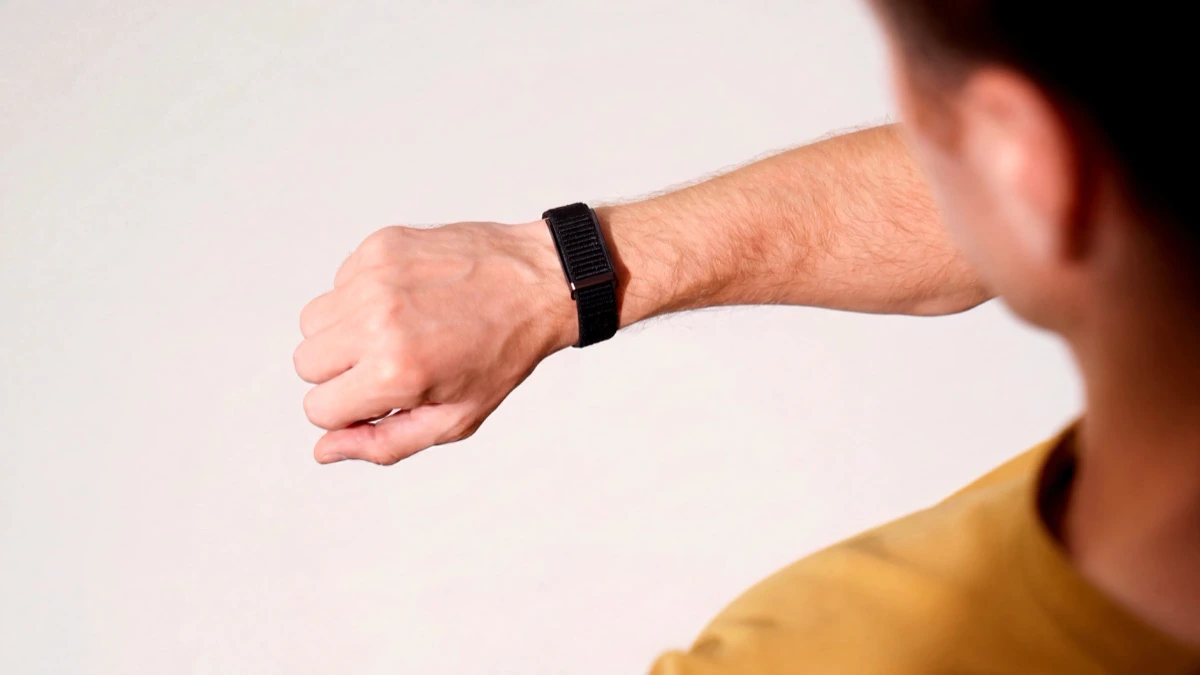
A wrist wearable with an optical PPG sensor measures your heart rate passively throughout the day and night. It detects when you are at rest and records a resting heart rate reading automatically, with no action required from you. Over time that builds a day-by-day trend none of the manual methods can match. The HLTH Band works this way. It measures continuously via optical PPG, calculates resting heart rate from rest periods through the day and during overnight sleep, and shows the trend alongside your HRV score in the app. Best for ongoing baseline tracking. PPG accuracy is highest at rest and lower at the high heart rates reached during exercise.
Comparing the five methods
A manual pulse check gives moderate accuracy and a single spot check, and needs you to count. A smartphone PPG app gives moderate accuracy and a single spot check, and needs you to hold still. A chest strap gives the highest accuracy and a single session, but needs setting up each time. A finger pulse oximeter gives moderate accuracy and a single spot check, with minimal effort once you own one. A continuous wrist wearable gives high accuracy and the only continuous trend, fully passively.
The best time to measure
For the most reliable and consistent reading, measure in the morning before you get out of bed. Your body has been still for several hours and has not yet been affected by food, caffeine or movement. If you are using a manual method, lie still for at least two minutes before you start, because any earlier movement will temporarily raise your heart rate above its true resting level. For continuous wrist wearables, timing is automatic. The device identifies rest periods and calculates RHR from those windows without any input from you.