
The HLTH Journal·The Science
Why we built the HLTH Band the way we did
No screen, no subscription, no nightly charge. Every one of those is a decision with a reason behind it.
HLTH Science Team· May 2026 · 5 min read

We did not want to build another fitness watch. The market has plenty of those. What we kept running into was a specific problem: people would buy a tracker, wear it for a few weeks, and then quietly stop. Not because the technology failed, but because the friction of daily use wore them down.
The short version
- No screen, because a screen costs battery and turns insight into engagement.
- Around 30 days between charges, because gaps in your record weaken your baseline.
- One price, no subscription, so we have to earn continued use through the product.
- Under 23 grams, because comfort is what makes people keep wearing it.
- No standalone GPS and no temperature sensor, both deliberate omissions.
No screen
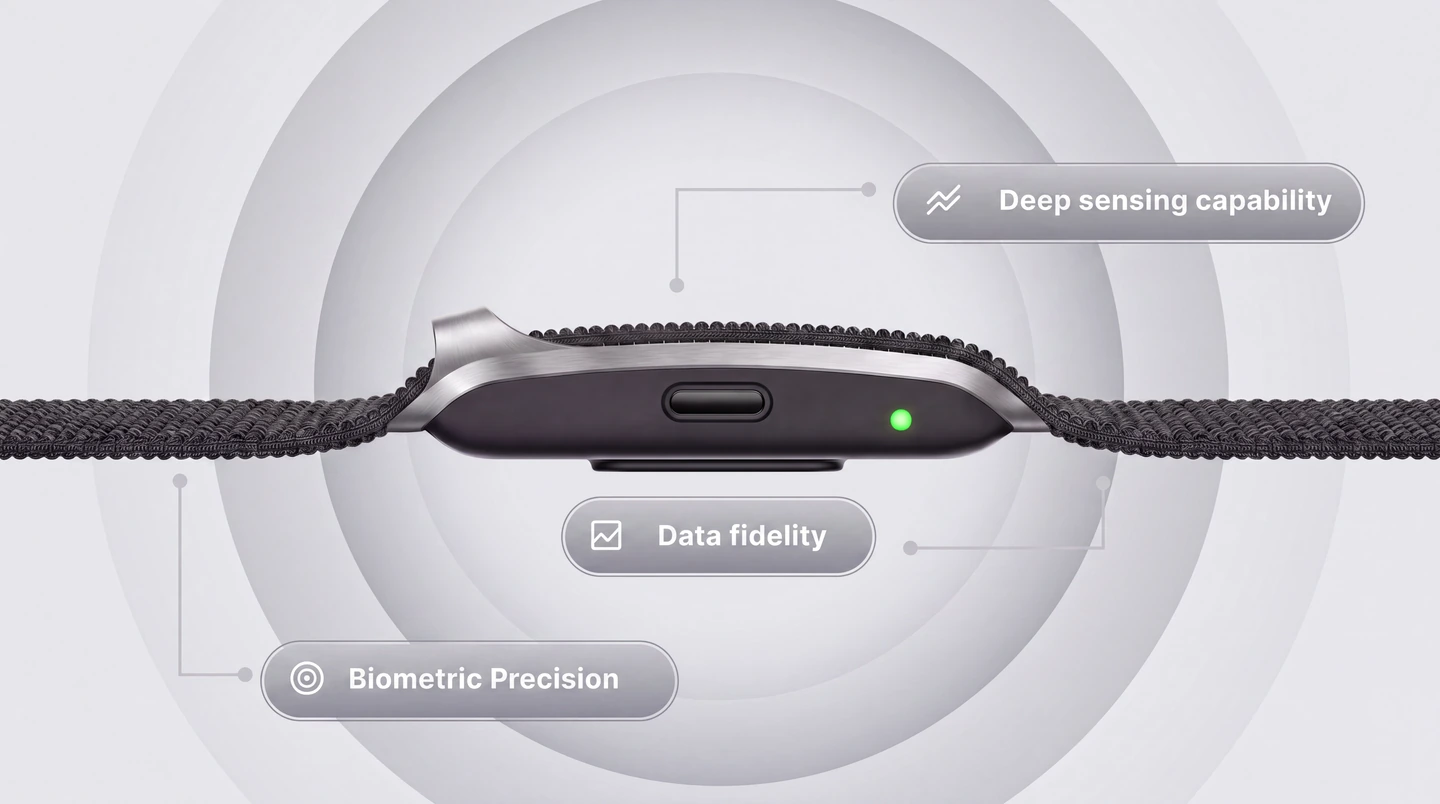
Every smartwatch screen is a trade-off. The display is useful, but it costs battery life to power, and it changes your relationship with the device in ways that work against the reason you are wearing it. A screen means you check it. You check it for the time, for messages, for your step count. That loop keeps you engaged with the device, but engagement is not the same as insight. It also forces design decisions that compound: a thicker chassis, a larger battery to power the display, shorter overall life between charges. We removed the screen entirely. The band uses an LED indicator for battery status and haptic vibration for alarms. There is nothing to check. You put it on and forget about it. Your data lives in the app, available when you choose to look at it, not flickering at you every time your arm moves.
Thirty days between charges
A device that needs daily charging has a built-in failure mode. The moment you travel without the cable, fall asleep before you remember to plug in, or simply have a busy day, that night’s data disappears. Over a year, a daily-charge device creates dozens of gaps in your record. For HRV tracking in particular, unbroken data matters. Your nightly readings build a personal baseline over time. Gaps in that record make the baseline less reliable and your band scores less meaningful. We engineered for around 30 days of battery life. The extended range comes from the screenless design and from how the band manages sensor processing across the day. The result is a device you charge on your own schedule, not the device’s.
One price, no subscription
When a device charges a monthly fee, the commercial relationship shifts. The company has an ongoing incentive to keep you engaged with the app, to surface new metrics, to push notifications. Those are not always bad things, but they are not neutral either. The HLTH Band is a one-off purchase. After that, the app and your data are yours. There is no tier to unlock and nothing to cancel. We have to earn continued use through the quality of the product rather than through billing cycles.
Under 23 grams
Weight is a comfort problem, and comfort is a compliance problem. If a device is heavy enough to feel, some people take it off during the day. Some stop wearing it to sleep. Both gaps reduce the quality of your data. The band weighs under 23 grams. We wanted it light enough that wearing it overnight feels like nothing. The people who forget they are wearing it are the people who generate the most complete records.
Your health data stays yours
The data the band collects is among the most personal data your body produces. Your overnight heart rate, your HRV, your sleep stages, your recovery patterns. We built the platform to be fully GDPR compliant from the ground up. That means clear consent before any data is processed, no sale of personal health data to third parties, and user control over what is stored and for how long. Your cardiovascular data reflects things about your health that you may not want out of your hands. We took that seriously in how we built the system.
What we decided not to include
The band does not have standalone GPS. The GPS function works with your phone instead. We made that choice because standalone GPS is one of the largest battery consumers in any wearable, and adding it would have cut the battery life considerably. For most people their phone is with them during a run or a ride, so working with the phone covers that need without the battery cost. The band also does not have a temperature sensor. Wrist-based temperature measurement at the consumer level does not currently produce data reliable enough to act on. We would rather give you fewer, more trustworthy data points than more data that is harder to interpret.