

Heart rate variability,explained
HLTH Science · 4 min read
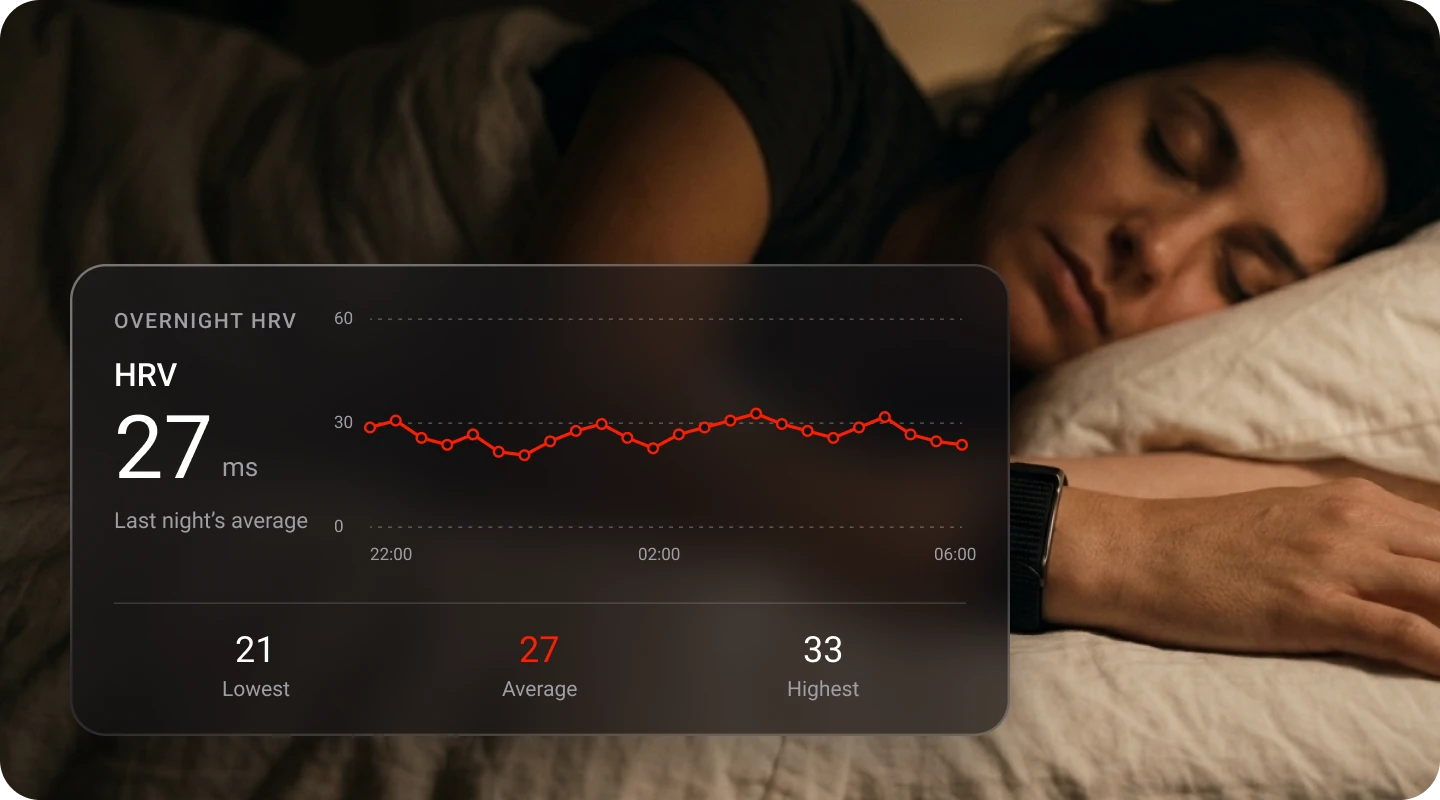
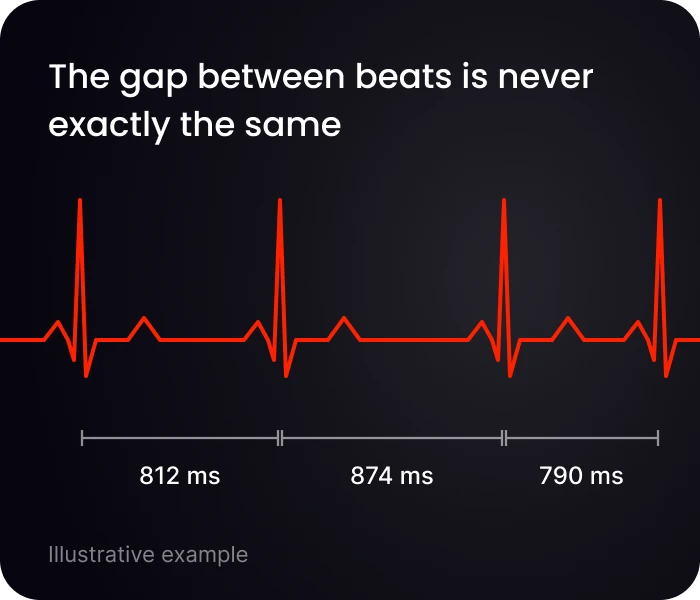
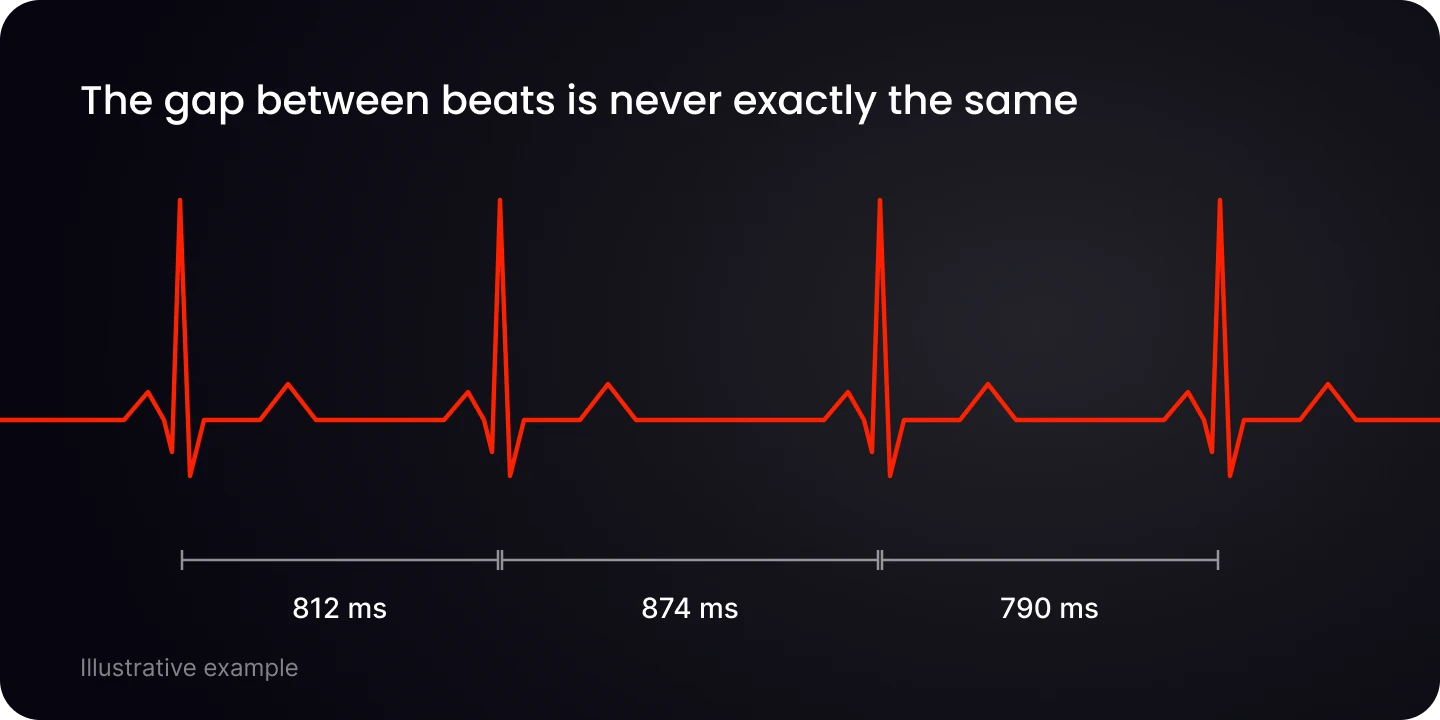
A healthy heart doesn’t tick like a clock. The time between beats shifts slightly from one beat to the next, and that variation, called HRV, reflects how your body is coping and recovering.
What is HRV?
HRV is the natural, millisecond-level variation in time between heartbeats [1]. HLTH Band tracks it overnight, when your body is still and readings are most comparable night to night.
Your two-speed nervous system
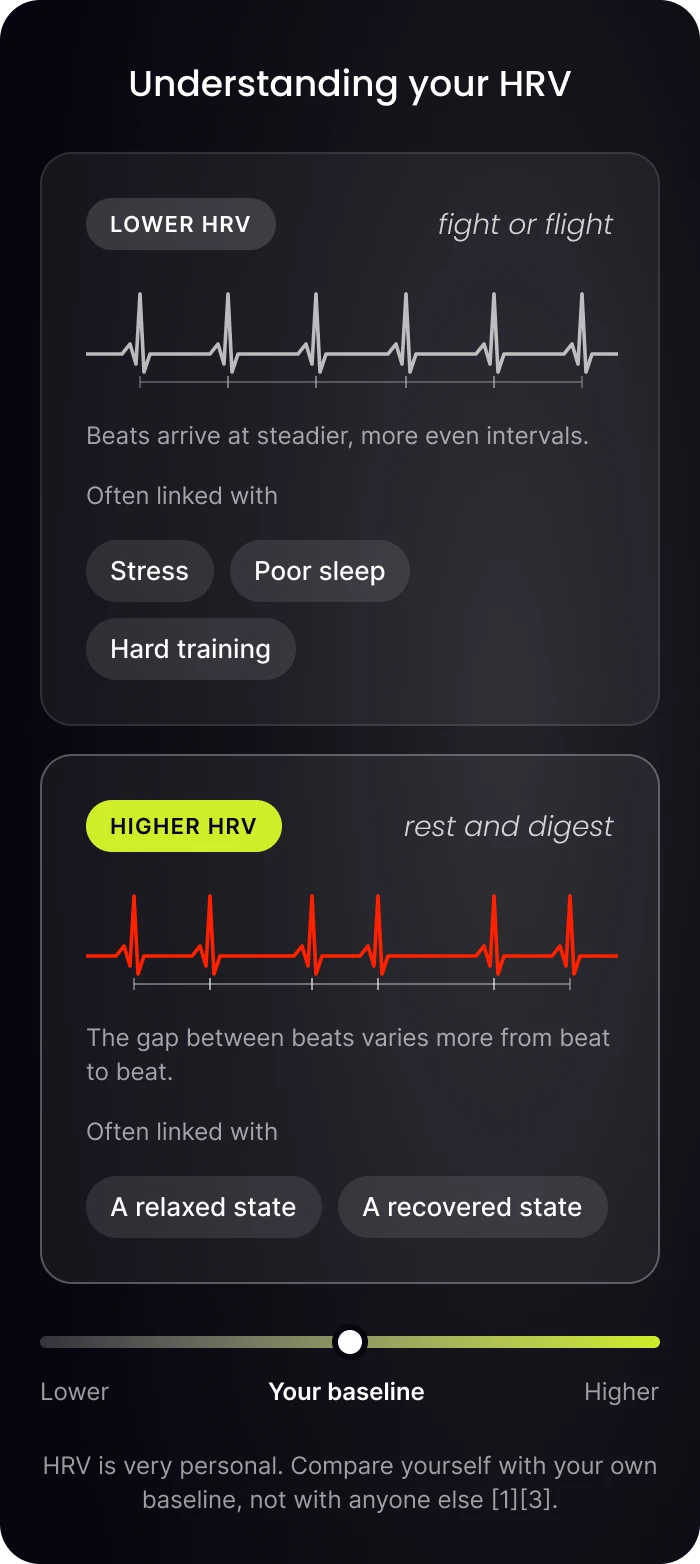
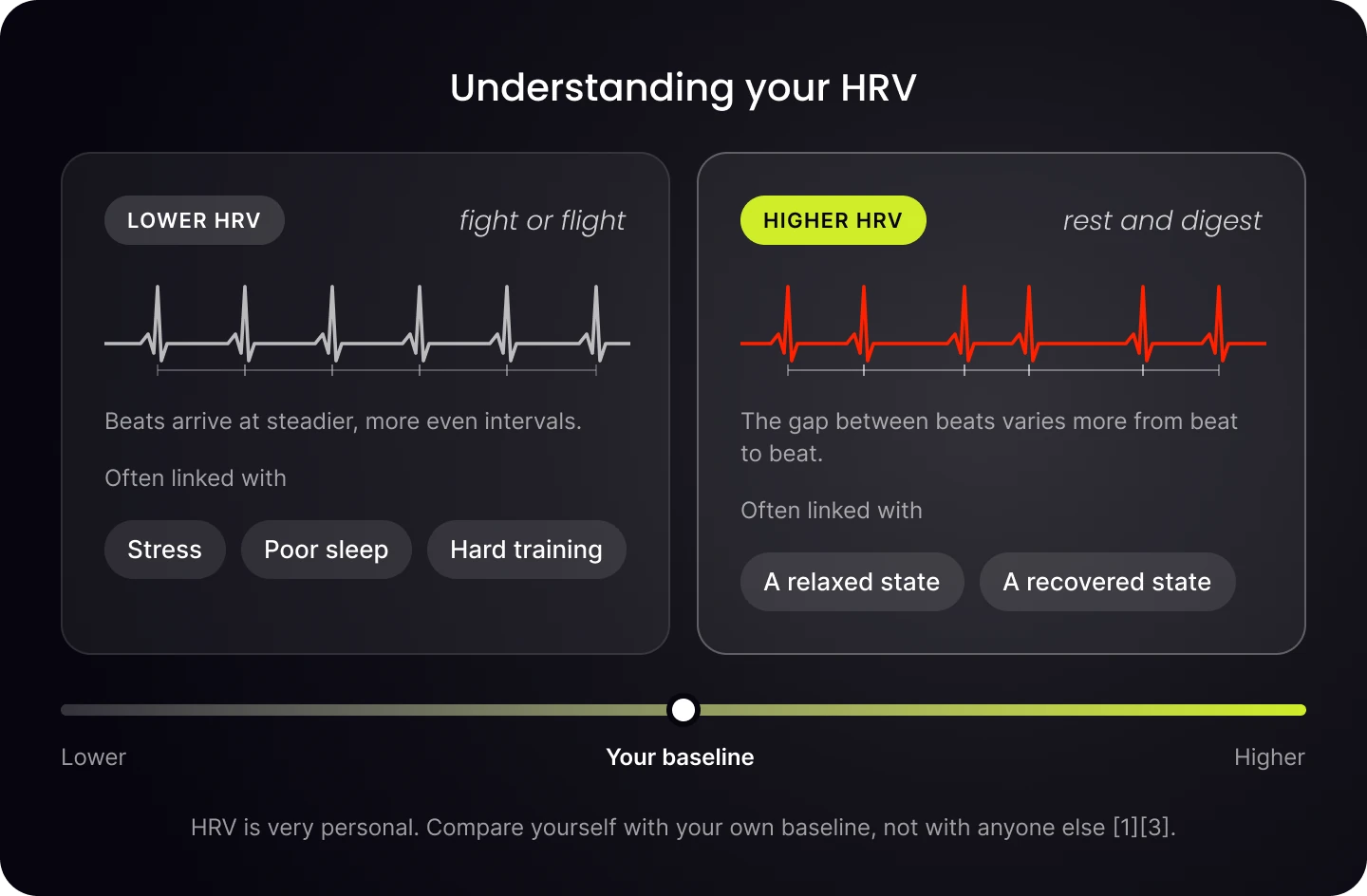
Your autonomic nervous system has two sides: “rest and digest”, which tends to raise HRV, and “fight or flight”, which tends to lower it [1][2]. HRV is one window into the balance between the two.
What higher or lower HRV means
As a rough guide, higher HRV is linked to a relaxed, recovered state, and lower HRV to stress, poor sleep or hard training [1][3]. But HRV is very personal. Compare yourself with your own baseline, not with anyone else.
What moves your HRV
Things you can’t change
- Genetics
- Age
HRV tends to fall with age [1].
Things you can change
- Sleep routine
- Alcohol
- Hydration
- Stress
- Training load

Habits that support your HRV
Keep regular sleep times, go easy on alcohol, build in rest days and find ways to unwind. Then watch your overnight trend over weeks rather than reacting to one night.
How HLTH Band tracks HRV
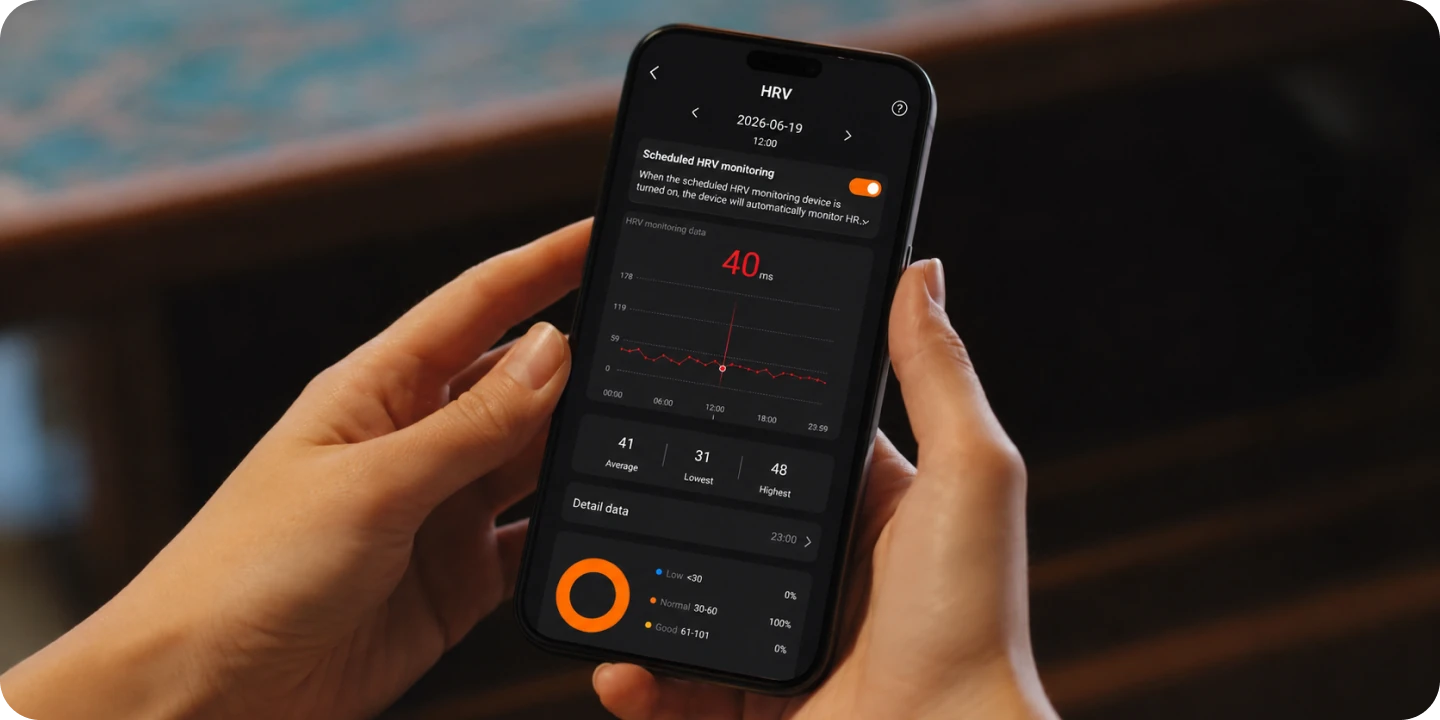
The band’s optical sensor reads the timing of your pulse while you sleep, and the app charts your overnight HRV as a trend. Daily ups and downs are normal; the longer trend is what’s useful. Use it to help decide whether to push or rest.
HRV questions
- What’s a good HRV?
- There’s no single good number. It’s personal [1].
- Why does mine change every day?
- Sleep, stress, alcohol and training all move it.
- When does the band track it?
- Overnight.
- Can HRV tell me if I’m ill?
- No. It’s a wellness trend, not a medical test.
See your own baseline
Overnight HRV, included with every band. No subscription.
Sources
[1] Shaffer F, Ginsberg JP (2017). An overview of heart rate variability metrics and norms. Frontiers in Public Health. pubmed.ncbi.nlm.nih.gov/29034226
[2] Task Force of the ESC and NASPE (1996). Heart rate variability: standards of measurement, physiological interpretation and clinical use. Circulation. pubmed.ncbi.nlm.nih.gov/8598068
[3] Kim HG et al. (2018). Stress and heart rate variability: a meta-analysis and review of the literature. Psychiatry Investigation. pubmed.ncbi.nlm.nih.gov/29486547