Blood oxygen,explained
HLTH Science · 3 min read
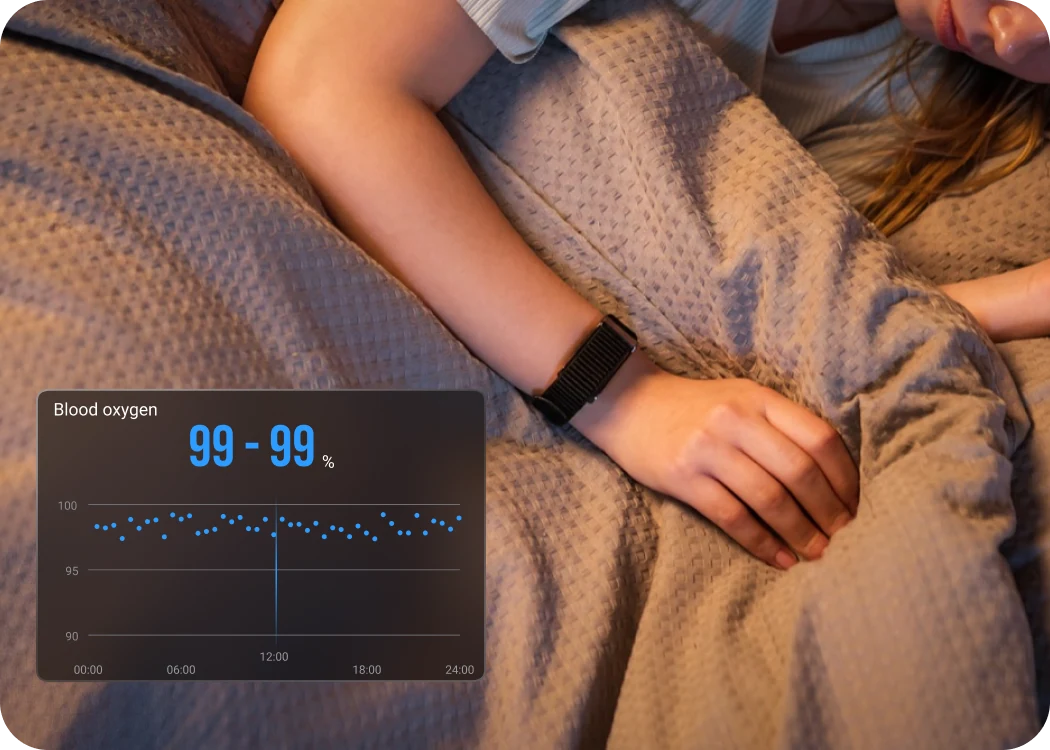
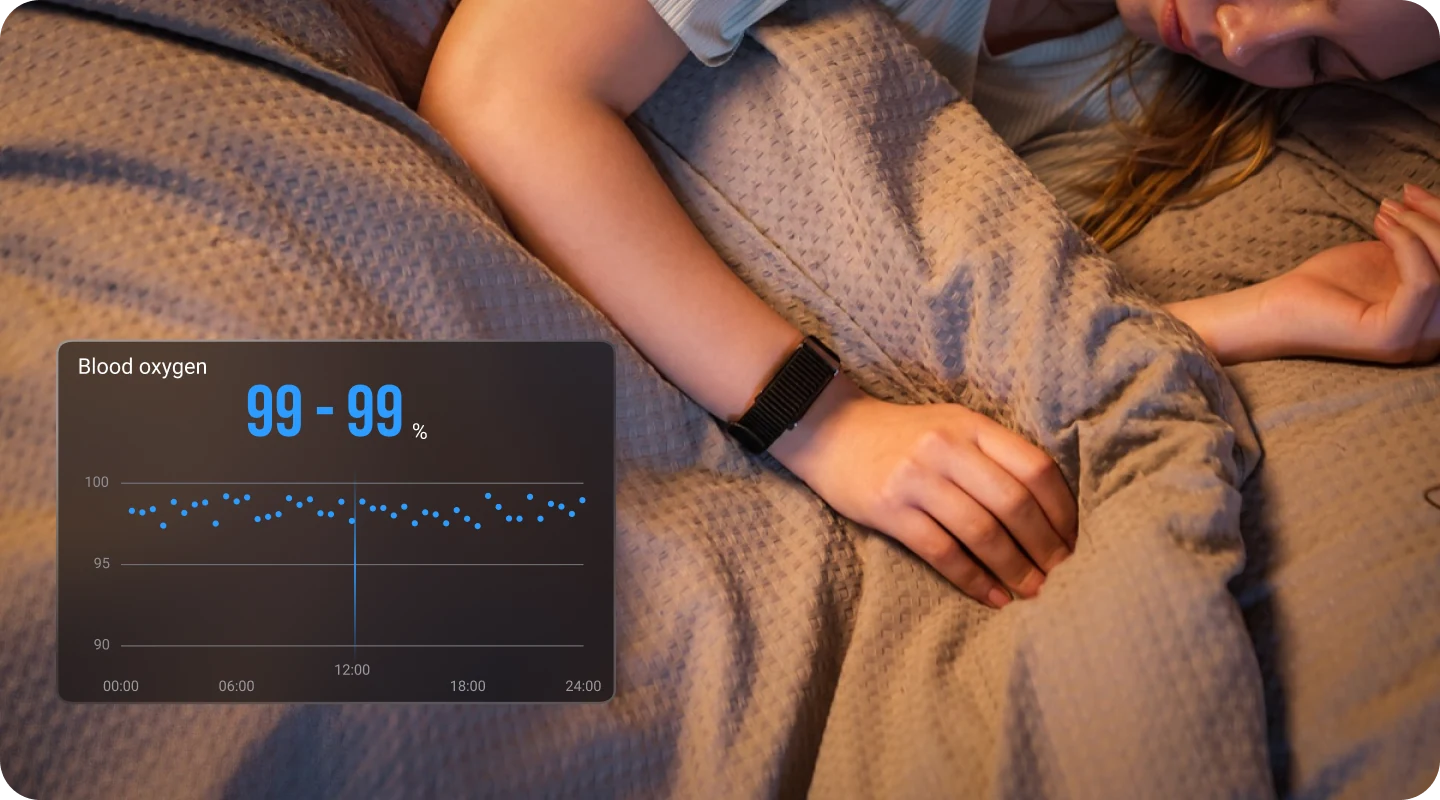
Blood oxygen (SpO2) is the share of your red blood cells carrying oxygen. HLTH Band tracks it day and night, so you can get to know your normal range.
What is SpO2?
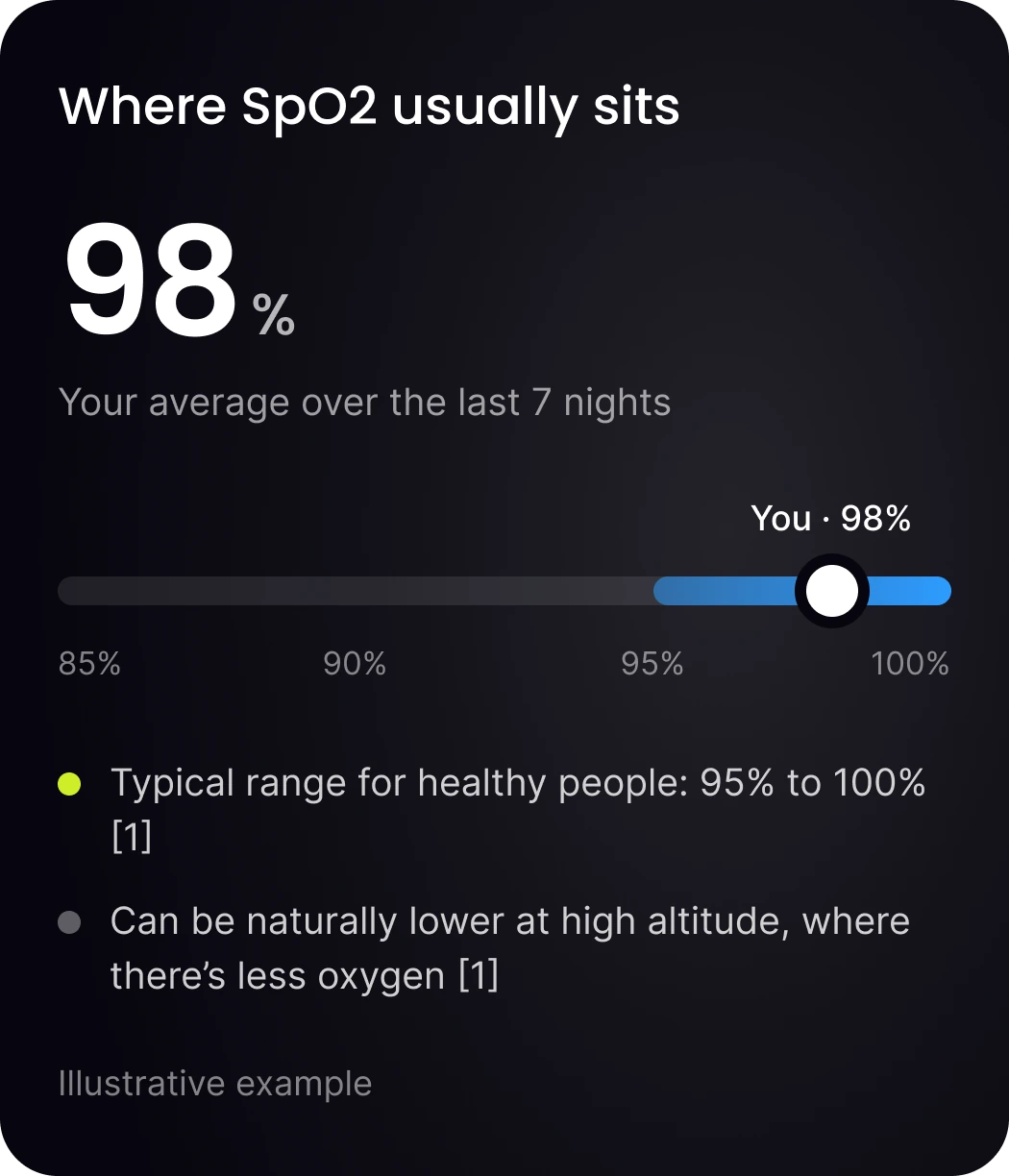
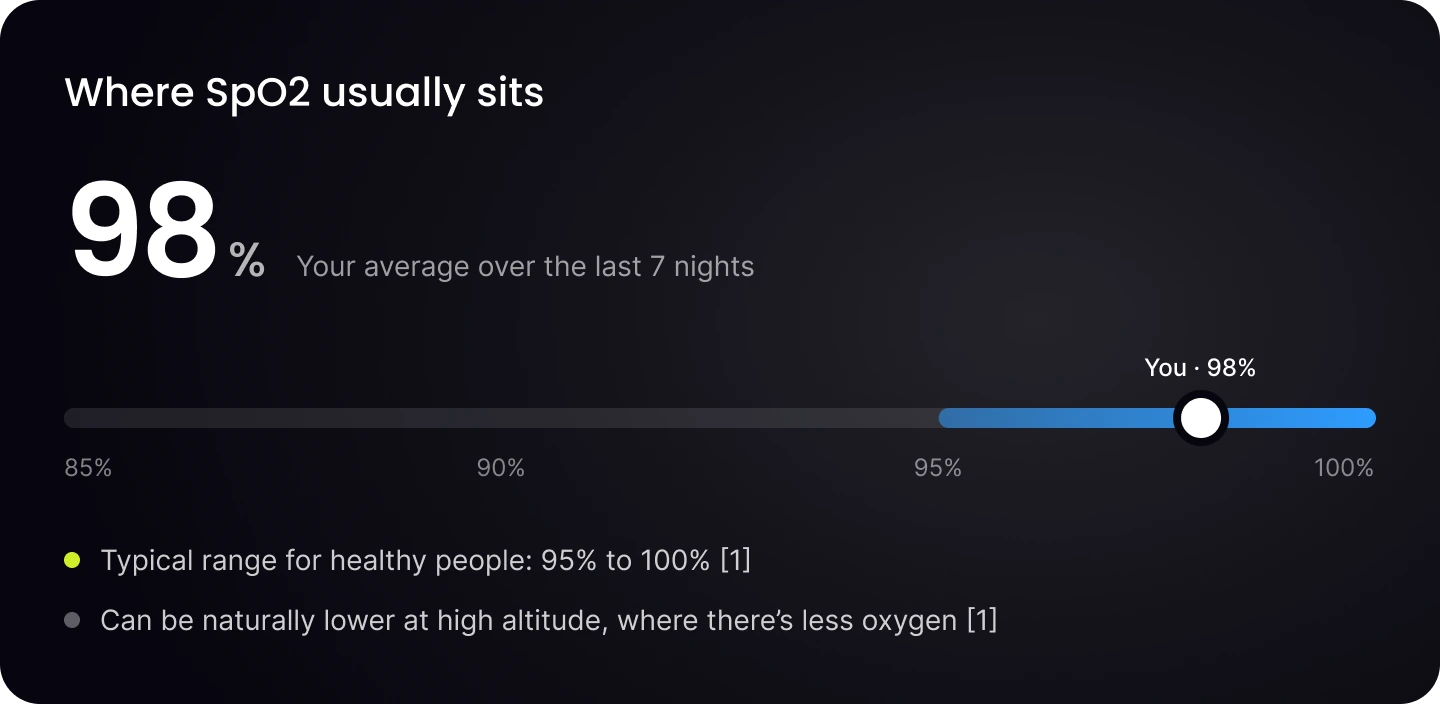
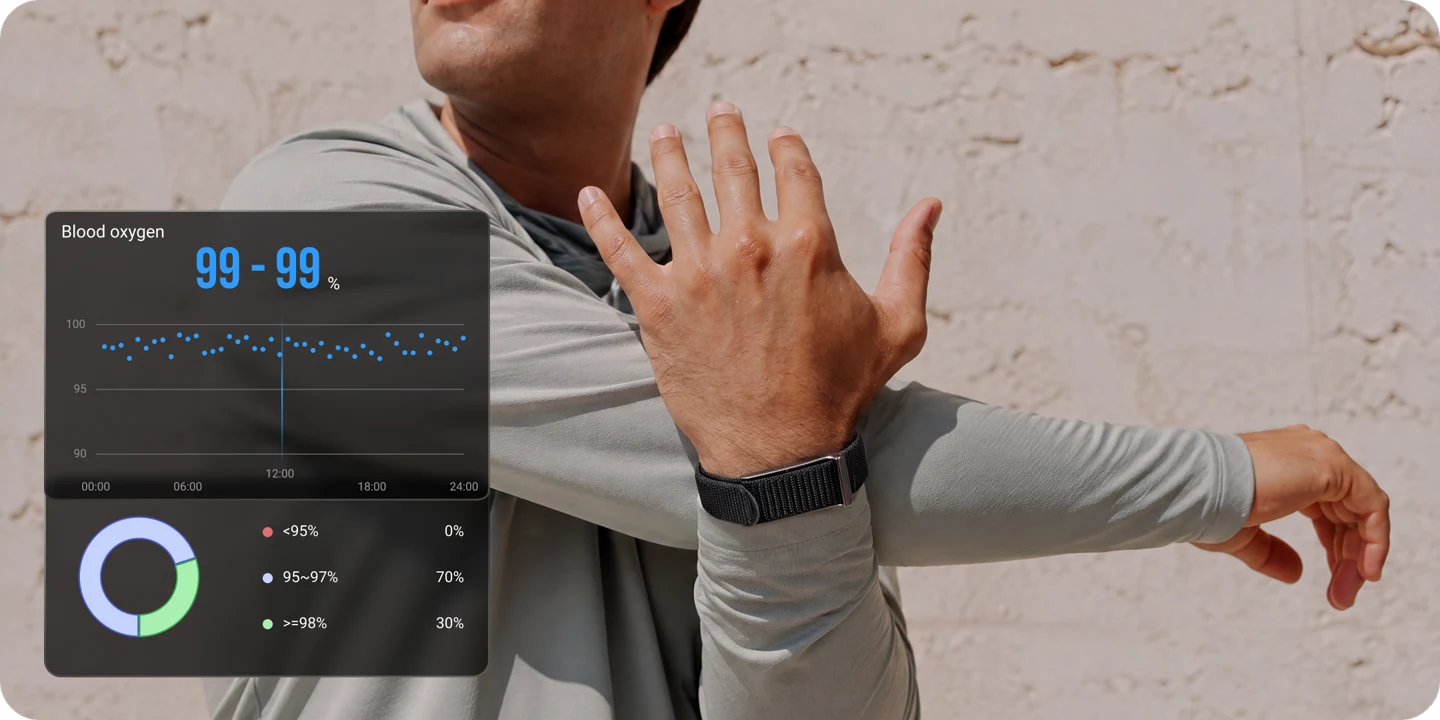
SpO2 is shown as a percentage. In healthy people it usually sits between 95% and 100%, and it can be naturally lower at high altitude, where there’s less oxygen in the air [1].
Why know your normal?
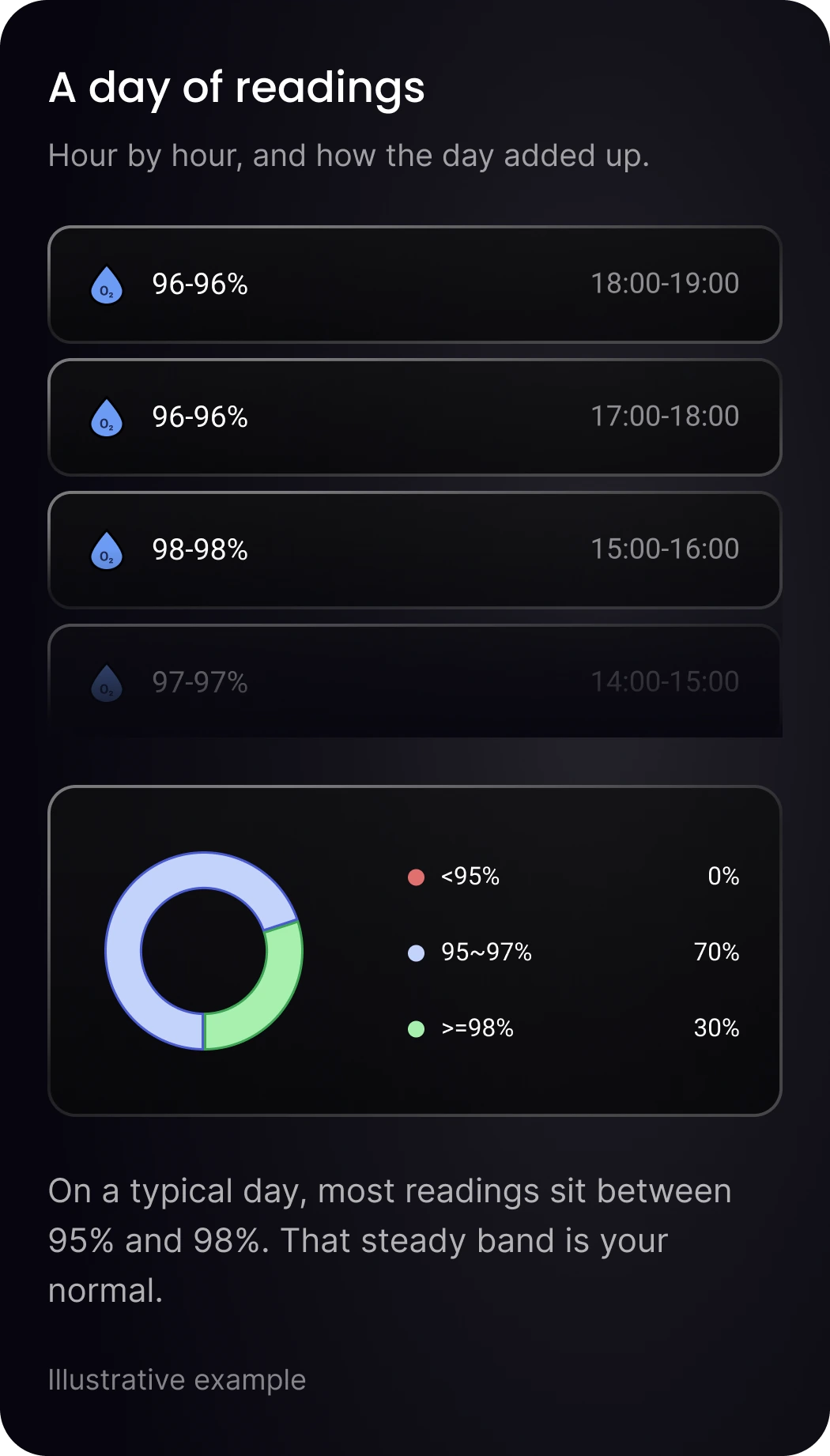
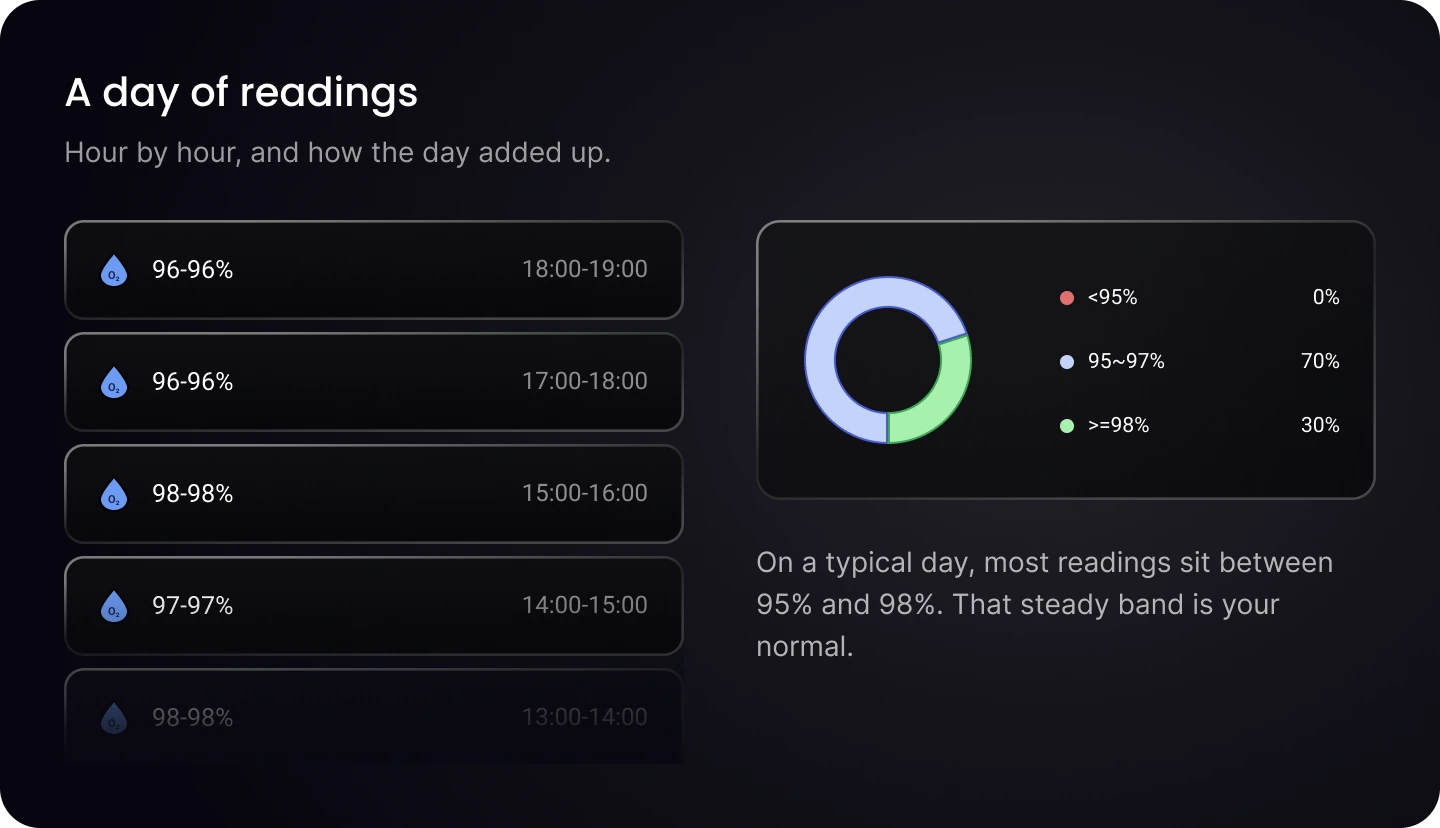
Everyone’s range is a little different. Knowing yours gives you context, for example after travel to altitude. It’s a wellness trend, not a medical reading.
How HLTH Band tracks it
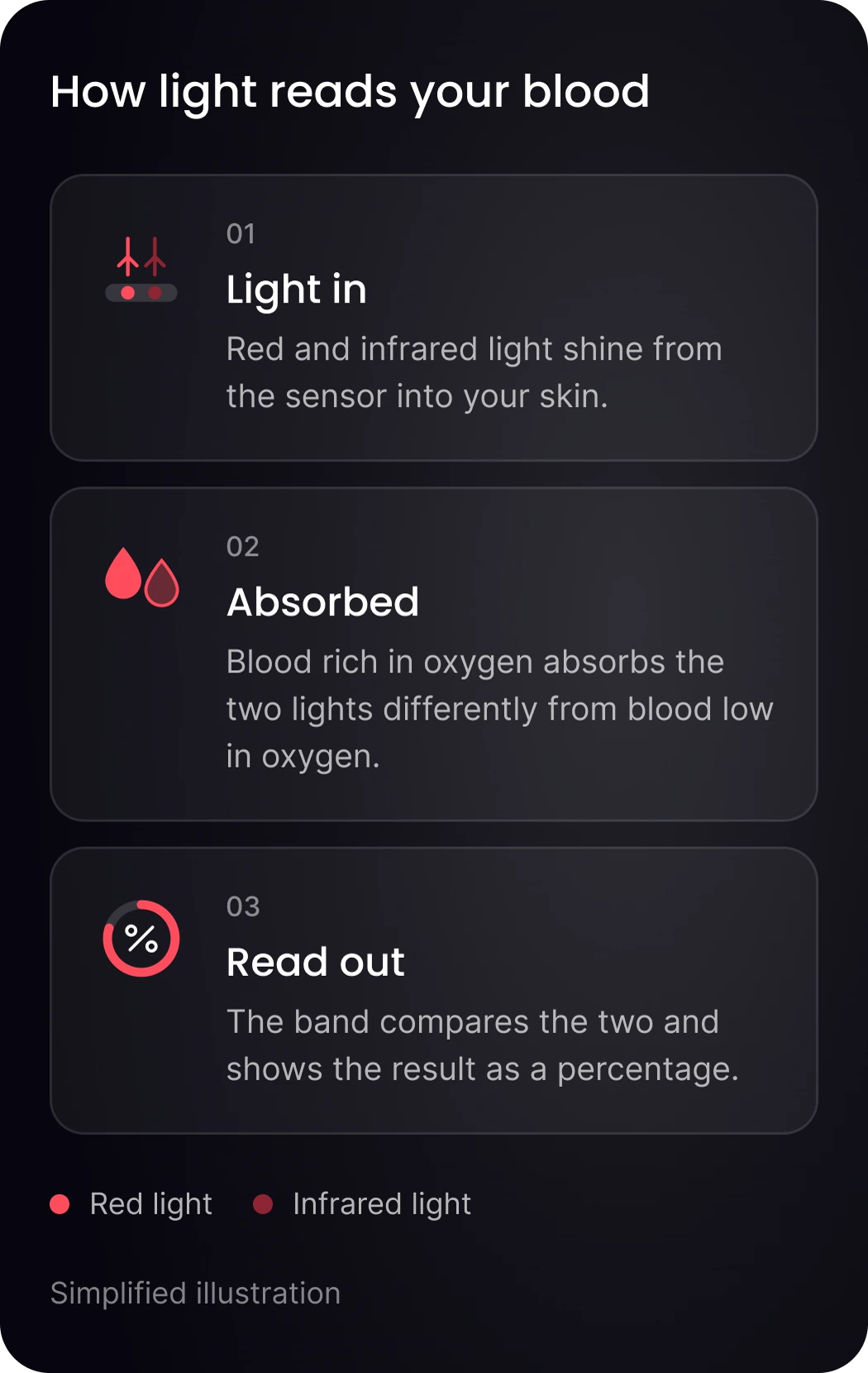
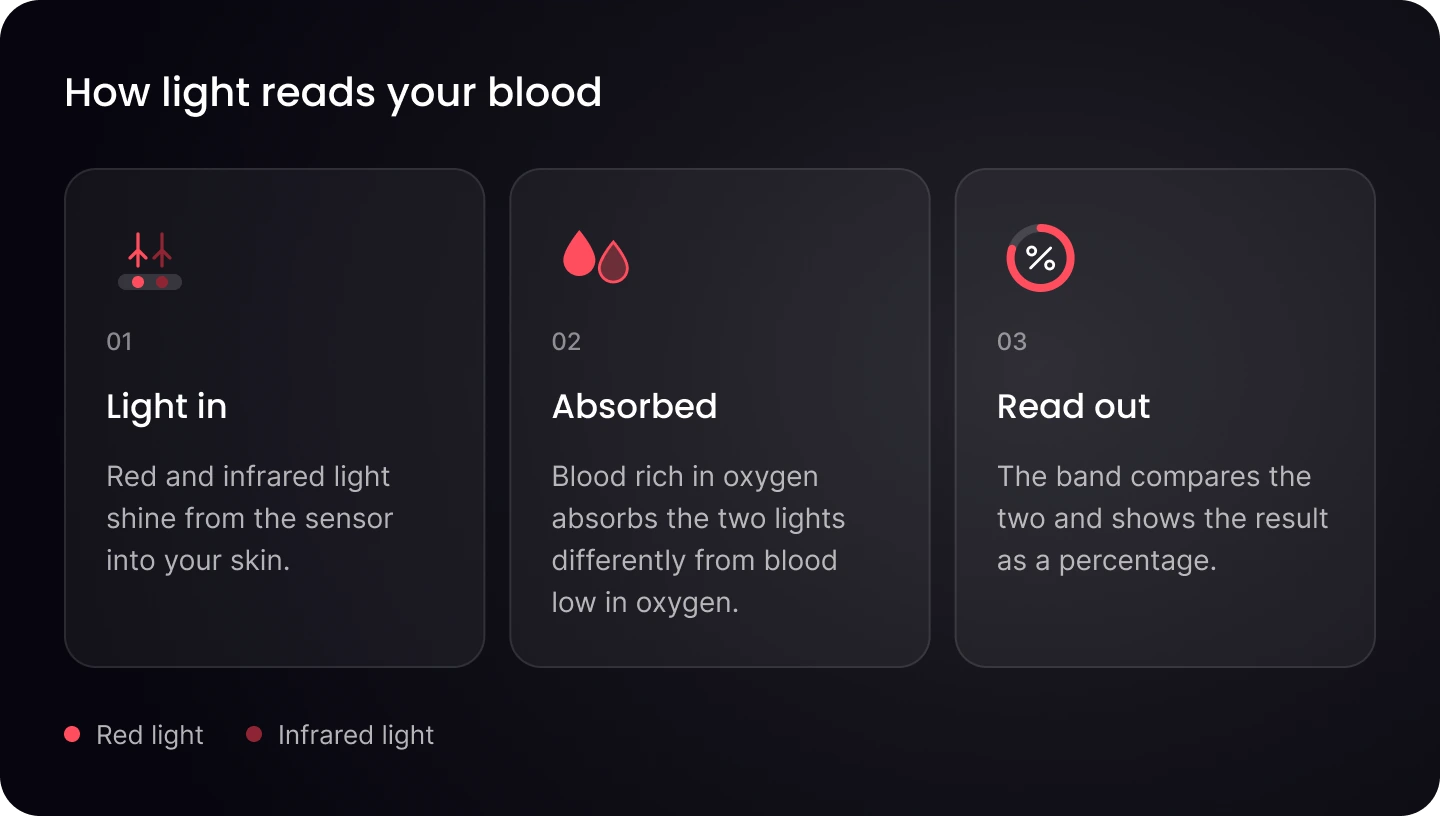
Red and infrared light from the optical sensor passes through your skin, and the way it’s absorbed shows how much oxygen your blood is carrying. Want a quick look? The 60-second vitals check gives you blood oxygen and heart rate in one tap.
Habits that help you breathe easy
Get outside and walk, try slow, deep breathing, and if you smoke, consider stopping.
Getting a good reading
Light-based readings can be affected by fit, movement and skin factors [2], so look at your trend rather than one number.
For a steady reading
Watch the trend, not one number.
What can affect it
Blood oxygen questions
- Is this a medical pulse oximeter?
- No. It’s a wellness device for trends.
- What if my number seems low?
- One reading isn’t a diagnosis. If you feel unwell or are worried, speak to a healthcare professional.
- When is it tracked?
- Day and night, plus on demand with the 60-second vitals check.
Know your normal
Blood oxygen trends, included with every band. No subscription.
Sources
[1] MedlinePlus (US National Library of Medicine). Pulse Oximetry. medlineplus.gov/lab-tests/pulse-oximetry
[2] Sjoding MW et al. (2020). Racial bias in pulse oximetry measurement. N Engl J Med. pubmed.ncbi.nlm.nih.gov/33326721
HLTH Band is a wellness device. It is not a medical device and is not intended to diagnose, treat, cure or prevent any disease.